Triassic Dinosaurs: A Glimpse into the Prehistoric World
The Triassic period, spanning from roughly 252 to 201 million years ago, marks a pivotal chapter in Earth's history. It was during this time that the first dinosaurs emerged, setting the stage for their dominance in the Mesozoic era. While many people associate dinosaurs with the later Cretaceous period, the Triassic era holds its own unique significance. This was a time of transition, as life on Earth adapted to new environmental conditions following the mass extinction event at the end of the Permian period.
Triassic dinosaurs are not just a group of ancient creatures—they represent a critical evolutionary milestone. These early dinosaurs were relatively small compared to their later counterparts, but they played a vital role in shaping the ecosystems of the time. Understanding Triassic dinosaurs offers insight into how life evolved and diversified in response to changing climates and landscapes.
The Emergence of Dinosaurs in the Triassic Era
The first dinosaurs appeared in what is now South America, Africa, and India, regions that were part of the supercontinent Pangaea. These early species were likely bipedal, with some possessing features that would later become defining characteristics of dinosaur anatomy. The Triassic period was marked by a warm, arid climate, which influenced the types of plants and animals that thrived during this time.
One of the key factors that allowed dinosaurs to flourish was the absence of large, dominant reptiles. After the Permian extinction, many of the dominant land animals had disappeared, creating an ecological vacuum that dinosaurs could fill. This lack of competition gave them the opportunity to evolve and diversify rapidly.
Although the Triassic period is often overshadowed by the more famous Jurassic and Cretaceous periods, it was during this time that the foundation for the dinosaur dominance was laid. The earliest known dinosaurs, such as *Eoraptor* and *Herrerasaurus*, were small, agile creatures that roamed the lush, swampy environments of the time.
Triassic Dinosaurs and Their Unique Characteristics
Triassic dinosaurs exhibited a range of physical traits that set them apart from their later relatives. Many of these early dinosaurs had long, slender legs, suggesting they were fast-moving and well-suited for running. Some species also possessed primitive features, such as teeth that were more suited for herbivory than carnivory, indicating a shift in dietary habits.
Another notable characteristic of Triassic dinosaurs was their size. While some species were as small as a dog, others reached lengths of up to 10 feet. This variation in size suggests that different species occupied various ecological niches, much like modern-day mammals and birds.
Despite their diversity, all Triassic dinosaurs shared certain anatomical similarities. They had hollow bones, which made them lightweight and efficient for movement. They also possessed a unique skeletal structure that would later be refined in more advanced dinosaur species. These adaptations helped them survive in the challenging environments of the Triassic period.
Triassic Dinosaurs and the Blocky Inline Font
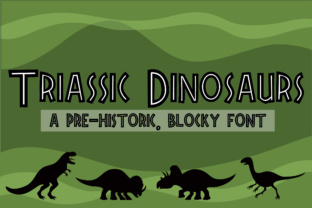
In the realm of digital design, the concept of "Triassic Dinosaurs" has taken on a new meaning. A blocky inline font with a pre-historic look has gained popularity among designers and developers who want to evoke a sense of nostalgia and adventure. This font style mimics the rugged, angular shapes of early dinosaurs, making it ideal for projects that require a strong visual identity.
The use of this font can add character to websites, logos, and branding materials. Its distinctive appearance makes it stand out in a crowded digital landscape, drawing attention and creating a memorable impression. Whether used for headings, buttons, or decorative elements, the blocky inline font brings a unique aesthetic to any project.
Designers often choose this font when they want to convey a sense of strength, resilience, and timelessness. It’s particularly effective in industries such as gaming, education, and entertainment, where a pre-historic theme can enhance the overall experience. The font’s simplicity and boldness make it versatile enough to work across different platforms and devices.
Exploring the World of Dinosaur Silhouettes
For those interested in the world of dinosaurs, silhouettes offer a fascinating way to explore these ancient creatures. A set of four bonus dinosaur silhouettes can serve as a valuable addition to any collection or educational resource. These silhouettes provide a quick and easy way to visualize different dinosaur species without the complexity of detailed illustrations.
Dinosaur silhouettes are especially useful in classrooms, museums, and online learning environments. They help students and visitors understand the basic shapes and sizes of various dinosaurs, making it easier to grasp concepts related to evolution, adaptation, and survival. The simplicity of silhouettes allows for greater focus on the key features of each species.
These silhouettes can also be used in creative projects, such as scrapbooking, art installations, and digital media. They offer a clean, minimalist approach that complements a wide range of design styles. Whether displayed as standalone images or integrated into larger compositions, dinosaur silhouettes add a touch of intrigue and historical context.
Practical Applications and Considerations
When incorporating Triassic dinosaurs into modern projects, it’s important to consider both the visual and functional aspects. The blocky inline font and dinosaur silhouettes can enhance user engagement, but they should be used thoughtfully to avoid overwhelming the audience. It’s essential to maintain a balance between creativity and usability, ensuring that the design elements serve a purpose rather than distract from the main content.
For businesses and organizations looking to incorporate these elements, it’s advisable to start with a clear objective. Are you aiming to create a nostalgic atmosphere, educate your audience, or simply add visual interest? Once the purpose is defined, the appropriate design choices can be made. Testing different layouts and color schemes can also help determine what works best for your target audience.
Additionally, it’s worth considering the accessibility of these design elements. Ensuring that text remains readable and that visual elements do not compromise the overall usability of a website or application is crucial. By prioritizing user experience, you can create a more engaging and effective design that resonates with your audience.
Ultimately, the integration of Triassic dinosaurs into modern design is not just about aesthetics—it’s about storytelling and connection. By drawing inspiration from the past, we can create experiences that are both informative and visually compelling. Whether through fonts, silhouettes, or other design elements, the legacy of Triassic dinosaurs continues to inspire and captivate us today.